


Nouveau : -5% dès 30€ | -10% dès 50€
Livraison offerte en point relais sans minimum d’achat !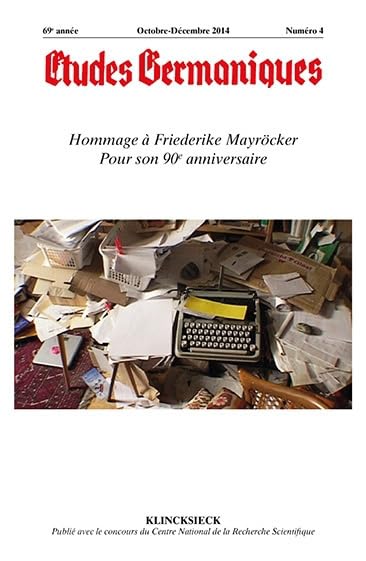
Temps
Marie-Renée Pimont



Biographie einer Biographielosen
Based on my experiences writing a monographical biography of Friederike Mayröcker I explore some dilemma's and paradoxes of biographical writing, both in the texts of Mayröcker herself and in the writing about her texts. In her prose texts as well as in paratexts Mayröcker cites and parodies conventions of (auto)biographical literature ; referential truth is both suggested and thwarted. When writing a biographical portrait, these ambivalences should be taken into account.
En me fondant sur mon expérience d’écrire une biographie monographique de Friederike Mayröcker, j’examinerai quelques dilemmes et paradoxes de l’écriture biographique dans les textes de Mayröcker même et dans les écrits qui traitent de ses textes. Dans ses textes en prose ainsi que dans les paratextes, Mayröcker cite et parodie des conventions de la littérature (auto)biographique ; la vérité référentielle est en même temps suggérée et troublée/contrariée. Lors de l’écriture d’un portrait biographique, ces ambivalences doivent être prises en compte.
Klaus KASTBERGER
Geheimnisse des Archivs Friederike Mayröcker und ihre Wohnung
The Essay deals with photographs of Friederike Mayröcker’s apartment in Vienna, where the author is immersed in slips of paper, manuscripts, newspaper cuttings, brochures, folders and books. The spatiality of the room is held to be an important condition for the specific appearance and an appropriate understanding of Mayröcker’s literature. The guest, who is invited to the cramped room, can be seen as a deputy of the reader. Both of them have to step onto areas, which show narrow contacts between the body of the author and the hoarded materials. In that way, Friederike Mayröcker is a challenge for literary criticism as well as for modern archival theory.
Le présent article traite de photographies de l’appartement viennois de Friederike Mayröcker dans lequel l’auteure est immergée dans des morceaux de papier, des manuscrits, des coupures de journaux, des brochures, des prospectus et des livres. La spatialité de la pièce apparaît comme une condition importante pour appréhender cet aspect spécifique et comme un moyen approprié pour comprendre la littérature mayröckerienne. L’hôte qui est invité dans la pièce exiguë peut être considéré comme un représentant du lecteur. Tous deux doivent avancer dans des espaces qui révèlent d’étroits contacts entre le corps de l’auteure et la masse de matériaux. À cet égard, Friederike Mayröcker constitue un défi pour la critique littéraire aussi bien que pour la théorie moderne d’archivage.
Aurélie LE NÉE
Friederike Mayröcker et le surréalisme selon André Breton
Friederike Mayröcker’s work has often been defined as "surreal", even if the signification of the adjective remains vague. This paper tries to clarify this concept by referring to Breton’s Theorization of Surrealism in the two manifestoes, and to highlight Friederike Mayröcker’s relation to this movement. The confrontation of Breton’s manifestoes with extracts from Mayröcker’s Magische Blätter and Gesammelte Gedichte leads to an analysis of keywords of Surrealism such as madness, dream, psychic automatism, association of ideas, magic, surreality, and reveals not only similarities, but also important differences in Breton’s and Friederike Mayröcker’s conception and practice of their art.
Friederike Mayröckers Werk wird oft als « surreal » bezeichnet, wobei die Bedeutung des Adjektivs vage bleibt. Der vorliegende Artikel versucht, den Begriff zu präzisieren, indem er sich auf Bretons Theoretisierung des Surrealismus in den beiden Manifesten bezieht, und Friederike Mayröckers Verhältnis zu dieser Strömung hervorzuheben. Die Gegenüberstellung der Manifeste Bretons mit Auszügen aus den Magischen Blättern und Gesammelten Gedichten Mayröckers führt zu einer Analyse von Kernbegriffen des Surrealismus wie Wahnsinn, Traum, automatischem Schreiben, Ideenassoziation, Magie, Surrealität, und bringt mehrere Ähnlichkeiten, aber auch wichtige Unterschiede zwischen Bretons und Friederike Mayröckers Kunstauffassung und –praxis ans Licht.
Michael HAMMERSCHMID
Stilleben. Reflexionen zur Ding-, Schreib- und Sprachwahrnehmung bei Friederike Mayröcker und mit Francis Ponge
My essay focuses on the thing (Ding) as an entity (or thing itself) which crosses Friederike Mayröcker’s work and is questioned deeply in “Stilleben” (1991) where Friederike Mayröcker refers to art and art history as well as to the status of language, writing, the book and the perception and creation of these entities. As a referring point the research of Francis Ponge in the field of things and their “visualization” in language helped a lot to open a space by comparing the poetics of these two great poets. The formulation of six thesis to Friederike Mayröcker’s “Stilleben” tries to outline six views that interact with each other, so that the question of how we see things and their relation to language and what literature can thereby show
| 176 |
| 9782215030287 |
| 2015 |
| Paperback |
Article de seconde main contrôlé
Livraison offerte en point relais
Livré à partir du 22 avril
Voir nos options de livraison
Biographie einer Biographielosen
Based on my experiences writing a monographical biography of Friederike Mayröcker I explore some dilemma's and paradoxes of biographical writing, both in the texts of Mayröcker herself and in the writing about her texts. In her prose texts as well as in paratexts Mayröcker cites and parodies conventions of (auto)biographical literature ; referential truth is both suggested and thwarted. When writing a biographical portrait, these ambivalences should be taken into account.
En me fondant sur mon expérience d’écrire une biographie monographique de Friederike Mayröcker, j’examinerai quelques dilemmes et paradoxes de l’écriture biographique dans les textes de Mayröcker même et dans les écrits qui traitent de ses textes. Dans ses textes en prose ainsi que dans les paratextes, Mayröcker cite et parodie des conventions de la littérature (auto)biographique ; la vérité référentielle est en même temps suggérée et troublée/contrariée. Lors de l’écriture d’un portrait biographique, ces ambivalences doivent être prises en compte.
Klaus KASTBERGER
Geheimnisse des Archivs Friederike Mayröcker und ihre Wohnung
The Essay deals with photographs of Friederike Mayröcker’s apartment in Vienna, where the author is immersed in slips of paper, manuscripts, newspaper cuttings, brochures, folders and books. The spatiality of the room is held to be an important condition for the specific appearance and an appropriate understanding of Mayröcker’s literature. The guest, who is invited to the cramped room, can be seen as a deputy of the reader. Both of them have to step onto areas, which show narrow contacts between the body of the author and the hoarded materials. In that way, Friederike Mayröcker is a challenge for literary criticism as well as for modern archival theory.
Le présent article traite de photographies de l’appartement viennois de Friederike Mayröcker dans lequel l’auteure est immergée dans des morceaux de papier, des manuscrits, des coupures de journaux, des brochures, des prospectus et des livres. La spatialité de la pièce apparaît comme une condition importante pour appréhender cet aspect spécifique et comme un moyen approprié pour comprendre la littérature mayröckerienne. L’hôte qui est invité dans la pièce exiguë peut être considéré comme un représentant du lecteur. Tous deux doivent avancer dans des espaces qui révèlent d’étroits contacts entre le corps de l’auteure et la masse de matériaux. À cet égard, Friederike Mayröcker constitue un défi pour la critique littéraire aussi bien que pour la théorie moderne d’archivage.
Aurélie LE NÉE
Friederike Mayröcker et le surréalisme selon André Breton
Friederike Mayröcker’s work has often been defined as "surreal", even if the signification of the adjective remains vague. This paper tries to clarify this concept by referring to Breton’s Theorization of Surrealism in the two manifestoes, and to highlight Friederike Mayröcker’s relation to this movement. The confrontation of Breton’s manifestoes with extracts from Mayröcker’s Magische Blätter and Gesammelte Gedichte leads to an analysis of keywords of Surrealism such as madness, dream, psychic automatism, association of ideas, magic, surreality, and reveals not only similarities, but also important differences in Breton’s and Friederike Mayröcker’s conception and practice of their art.
Friederike Mayröckers Werk wird oft als « surreal » bezeichnet, wobei die Bedeutung des Adjektivs vage bleibt. Der vorliegende Artikel versucht, den Begriff zu präzisieren, indem er sich auf Bretons Theoretisierung des Surrealismus in den beiden Manifesten bezieht, und Friederike Mayröckers Verhältnis zu dieser Strömung hervorzuheben. Die Gegenüberstellung der Manifeste Bretons mit Auszügen aus den Magischen Blättern und Gesammelten Gedichten Mayröckers führt zu einer Analyse von Kernbegriffen des Surrealismus wie Wahnsinn, Traum, automatischem Schreiben, Ideenassoziation, Magie, Surrealität, und bringt mehrere Ähnlichkeiten, aber auch wichtige Unterschiede zwischen Bretons und Friederike Mayröckers Kunstauffassung und –praxis ans Licht.
Michael HAMMERSCHMID
Stilleben. Reflexionen zur Ding-, Schreib- und Sprachwahrnehmung bei Friederike Mayröcker und mit Francis Ponge
My essay focuses on the thing (Ding) as an entity (or thing itself) which crosses Friederike Mayröcker’s work and is questioned deeply in “Stilleben” (1991) where Friederike Mayröcker refers to art and art history as well as to the status of language, writing, the book and the perception and creation of these entities. As a referring point the research of Francis Ponge in the field of things and their “visualization” in language helped a lot to open a space by comparing the poetics of these two great poets. The formulation of six thesis to Friederike Mayröcker’s “Stilleben” tries to outline six views that interact with each other, so that the question of how we see things and their relation to language and what literature can thereby show
| Edition | Fleurus |
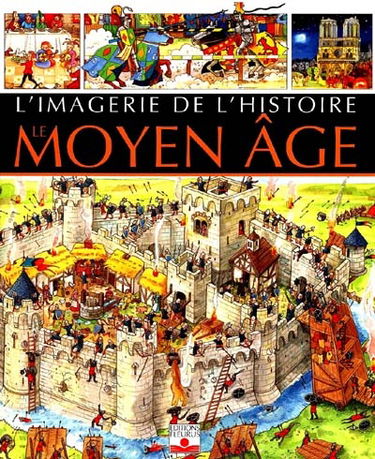
| Dimensions (L x H x E, cm) | Nc X 22.1 X 17.9 |
| Auteur | Marie-Renée Pimont |
| Nombre de pages | 176 |
| ISBN | 9782215030287 |
| Date de publication | 2015 |
| Reliure | Paperback |
Article de seconde main contrôlé
Livraison offerte en point relais
Livré à partir du 22 avril
Voir nos options de livraison
Votre achat c'est :





Livraison rapide et incluse Livraison rapide et incluse
Vous recevrez votre commande dans les 3 à 5 jours.
+3 millions de clients +3 millions de clients
Nous ont déjà fait confiance depuis 2008.
Votre satisfaction est notre priorité
Sécurité Sécurité
Soyez rassurés : les transactions sont 100% sécurisées.
Un geste solidaire Un geste solidaire
Collecte de vos livres à domicile
Votre achat c'est :
Ces livres pourraient aussi vous plaire:

Donner ou revendre mes livres
Nous reprenons gratuitement vos livres à Paris, Lyon, Lille, Nantes, Bordeaux, Madrid, Strasbourg, Toulouse et leurs environs.



Donnez une seconde vie à vos livres !
DON ou VENTE de vos livres :
nous avons forcément une solution qui vous conviendra !

Gratuit

Simple et rapide

Engagé et français
Livres du même auteur:









Avis des lecteurs Recyclivre